Vault Structure Claude Code PARA: 4 Tầng Tổ Chức 2026

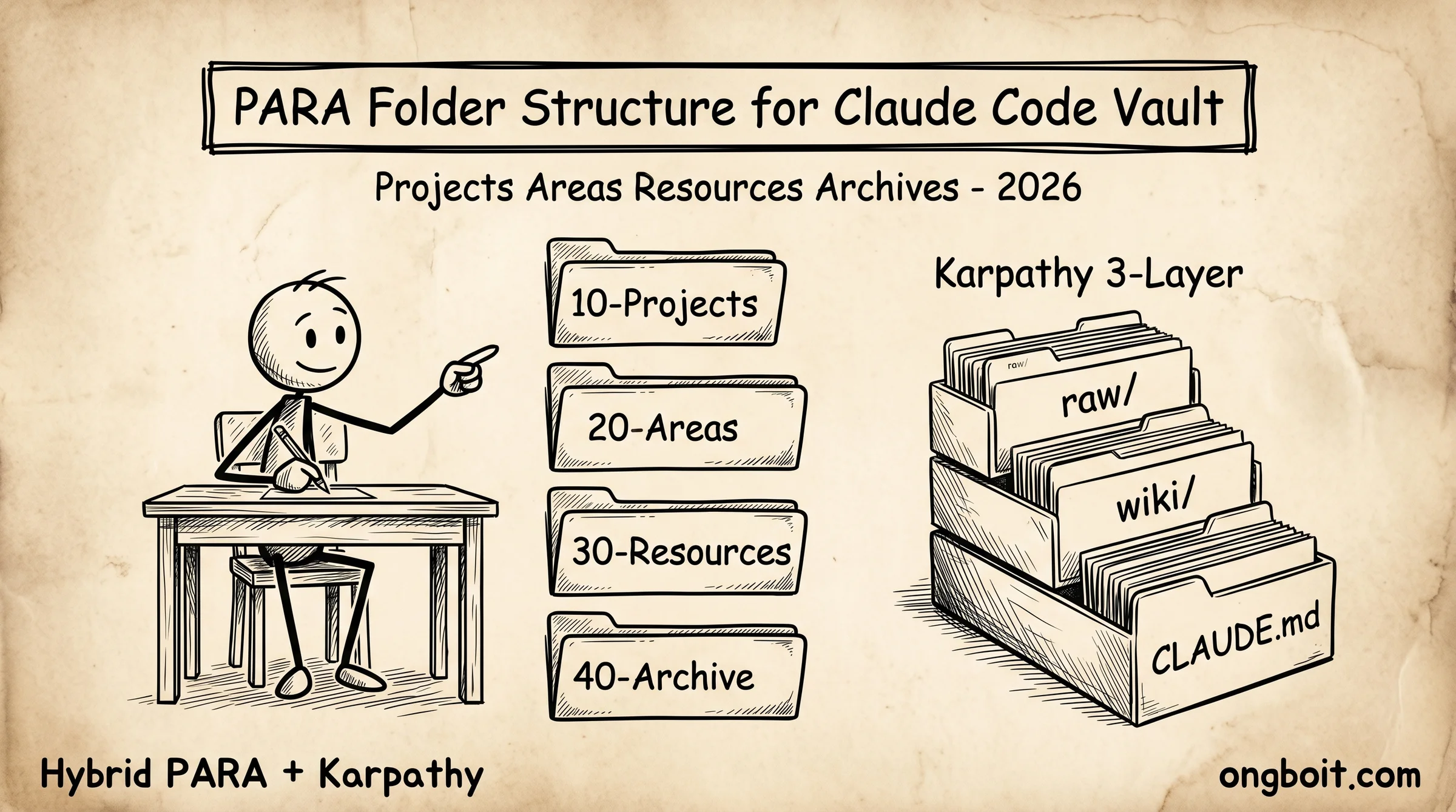
Vault structure Claude Code PARA áp dụng phương pháp PARA (Projects, Areas, Resources, Archives) của Tiago Forte vào folder structure Obsidian + Claude Code. PARA tổ chức thông tin theo actionability (mức độ cần dùng để đạt goal), không phải theo topic. Khi kết hợp với 3-layer architecture Karpathy LLM Wiki, bạn có vault vừa actionable vừa compounding knowledge.
Bài này hướng dẫn cấu trúc folder PARA chi tiết cho developer dùng Claude Code, bao gồm cách map 4 tầng PARA với 3 lớp Karpathy, naming convention numbered prefix, auto-archive workflow, và case khi nào nên dùng PARA modified vs strict. Mình đã chạy PARA + Karpathy hybrid trong vault 300 notes 3 tháng, kết quả tổng hợp ở section cuối.
TL;DR
- PARA method của Tiago Forte chia thông tin thành 4 tầng theo actionability: Projects (có goal + deadline), Areas (responsibility ongoing), Resources (interest reference), Archives (đã hoàn thành hoặc inactive).
- Kết hợp PARA với 3-layer Karpathy LLM Wiki tạo vault hybrid: PARA cho user content, raw/wiki cho Claude-managed knowledge. Hai pattern không xung đột mà bổ sung nhau.
- Naming convention numbered prefix (00-inbox, 10-projects, 20-areas, 30-resources, 40-archive) giúp Claude index đúng thứ tự và folder nào ưu tiên đọc.
- Auto-archive workflow: Project hoàn thành → Claude tự move sang 40-archive với metadata completion date, link tới notes liên quan stay intact.
PARA Method Là Gì?
PARA (Projects, Areas, Resources, Archives) là phương pháp tổ chức thông tin do Tiago Forte phát triển trong sách “Building a Second Brain”. Khác với folder organization theo topic truyền thống (research, code, personal, etc), PARA tổ chức theo actionability: thông tin càng actionable cho goal hiện tại càng được prioritize trên top.
Bốn tầng PARA có ý nghĩa cụ thể. Projects là việc có goal rõ ràng và deadline cụ thể. Ví dụ “ship feature X by 2026-06-30”, “viết blog post Y by next Friday”, “đọc xong sách Z trong 2 tuần”. Project luôn có end-date. Areas là responsibility ongoing không có end-date. Ví dụ “Personal Health”, “Finance”, “Career Development”, “Side Projects”. Areas tồn tại miễn là bạn còn coi nó là responsibility. Resources là topic interest reference, không cần action ngay. Ví dụ “AI Research”, “Cooking Recipes”, “Travel Destinations”. Resources accumulate qua thời gian, dùng khi cần. Archives là Projects + Areas + Resources đã hoàn thành hoặc không còn relevant. Inactive zone, tham khảo only.
Nguyên tắc cốt lõi của PARA: thông tin di chuyển giữa 4 tầng theo lifecycle. Idea bắt đầu ở Resources (interest), chuyển thành Project (có goal), kết thúc Project move sang Archives. Areas của bạn quyết định Projects nào pursue. Resources feed cả Areas và Projects khi cần inspiration hoặc reference.
PARA phù hợp với developer vì 3 lý do. Một, dev hay làm nhiều project parallel, PARA cho phép switch context nhanh giữa projects mà không lost. Hai, knowledge từ Resources reusable cross-project, không phải re-research mỗi project. Ba, PARA align tốt với agile mindset (Project = sprint, Area = backlog, Archive = done).
PARA Cho Claude Code Obsidian Khác PARA Truyền Thống Thế Nào?
PARA truyền thống thiết kế cho Notion, Evernote, hoặc Apple Notes. Khi áp dụng vào Obsidian + Claude Code, có 3 điểm khác biệt quan trọng cần adapt: numbered prefix folders, integration với 3-layer LLM Wiki pattern, và automation qua slash commands.
Numbered prefix folders là convention Obsidian community phát triển. Thay vì đặt tên thuần Projects/, dùng 10-projects/. Số prefix giúp Obsidian sort folders theo thứ tự logic (00 trước 10 trước 20), không phải alphabet. Claude Code dùng prefix này để hiểu priority: folder số nhỏ = ưu tiên cao hơn.
Convention numbered phổ biến nhất dev VN dùng:
vault-root/
├── 00-inbox/         # Capture quick, chưa phân loại
├── 10-projects/      # Active projects với deadline
├── 20-areas/         # Ongoing responsibilities
├── 30-resources/     # Reference content theo topic
├── 40-archive/       # Inactive (completed projects, ended areas)
├── raw/              # Karpathy Layer 1: nguồn thô Claude reads
├── wiki/             # Karpathy Layer 2: Claude writes entity/concept pages
└── CLAUDE.md         # Karpathy Layer 3: schema (xem [5 templates](/claude-md-trong-vault-obsidian/))
Cấu trúc hybrid này có 2 tầng song song. PARA (00-40 prefix) là user content, do user write. raw/wiki/ là Claude-managed knowledge layer. Hai tầng không overlap: bạn không bao giờ thấy project file trong wiki/, ngược lại Claude không tạo entity page trong projects/. Quy tắc data flow một chiều từ 3-layer architecture vẫn áp dụng: Claude READ everything, WRITE only to wiki/.
Integration thông qua slash commands. Khi Claude detect file nào đó trong 10-projects/ mention một concept (ví dụ “Karpathy LLM Wiki”), Claude có thể tự link tới wiki/concepts/karpathy-llm-wiki.md. User content và Claude content cross-link nhau, build knowledge graph mà mỗi phần có owner rõ ràng.
Folder Structure 4 Tầng PARA + Claude Code Mapping
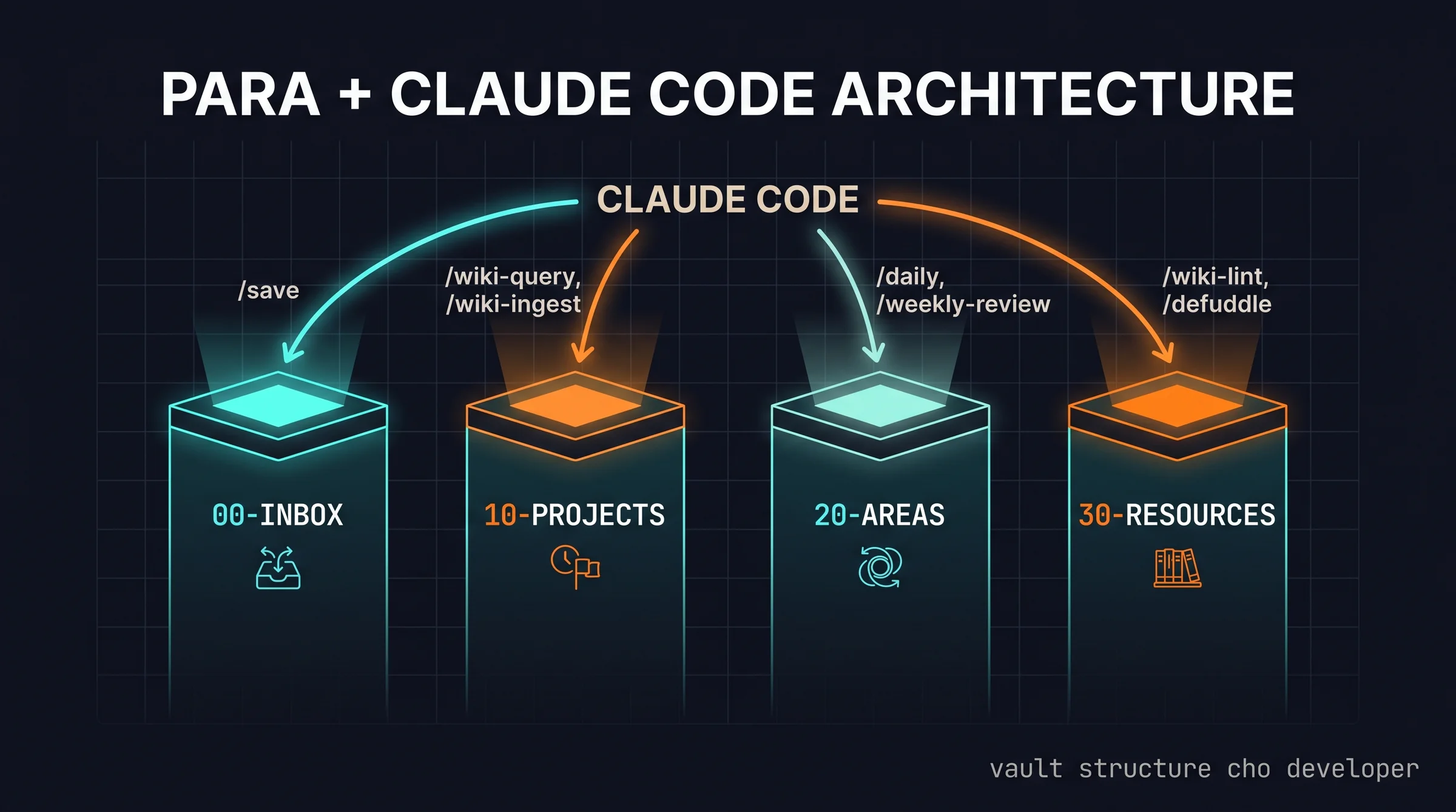
Folder structure 4 tầng PARA với numbered prefix kết hợp 3-layer Karpathy. Đây là cấu trúc tối ưu nhất mình thấy sau 3 lần restructure vault:
vault-root/
├── 00-inbox/                          # Quick capture
│   └── 2026-05-03-quick-thought.md
├── 10-projects/                       # Goal + deadline
│   ├── ongboit-blog-cluster-obsidian/
│   │   ├── _index.md                  # project root note
│   │   ├── drafts/
│   │   ├── research-links.md
│   │   └── timeline.md
│   ├── client-acme-api-redesign/
│   └── personal-vietnamese-newsletter/
├── 20-areas/                          # Ongoing responsibilities
│   ├── career/
│   ├── health-finance/
│   ├── relationships/
│   └── learning-pipeline/
├── 30-resources/                      # Interest reference
│   ├── ai-research/
│   ├── obsidian-ecosystem/
│   ├── claude-code-skills/
│   └── books-courses/
├── 40-archive/                        # Inactive
│   ├── 2026-Q1-projects/
│   ├── 2025-projects/
│   └── deprecated-areas/
├── raw/                               # Karpathy Layer 1
│   ├── articles/
│   ├── papers/
│   ├── transcripts/
│   └── inbox/                         # Different from 00-inbox above
├── wiki/                              # Karpathy Layer 2
│   ├── entities/
│   ├── concepts/
│   ├── sources/
│   ├── synthesis/
│   ├── index.md
│   └── log.md
└── CLAUDE.md                          # Karpathy Layer 3 (schema)
Mỗi folder có vai trò rõ và Claude permissions khác nhau. 00-inbox/ is Quick Capture zone, content tạm thời, Claude phân loại định kỳ (cuối ngày). 10-projects/ mỗi project là sub-folder với _index.md làm root note, drafts/, research links/. Claude assist khi yêu cầu, không tự modify. 20-areas/ structured theo responsibility, folder tồn tại lâu dài. Claude maintain status note nếu có. 30-resources/ structured theo topic interest. Claude có thể append content khi research mới relevant. 40-archive/ time-based subfolder (2026-Q1-projects, etc). Claude move project hoàn thành vào đây với metadata.
Quy ước naming chi tiết. Project folder format: client-or-context-project-name (ongboit-blog-cluster-obsidian). Areas folder: lowercase với hyphen (career, health-finance). Resources folder: topic-domain (ai-research, books-courses). Archives folder: time-bucket (2026-Q1-projects, 2025-completed).
Project Folder Hoạt Động Ra Sao?
Project folder là core của PARA, nơi 80% thời gian active của bạn diễn ra. Mỗi project là sub-folder trong 10-projects/, có structure consistent giúp Claude navigate dễ và bạn switch context nhanh.
Cấu trúc project folder chuẩn:
10-projects/
└── ongboit-blog-cluster-obsidian/
    ├── _index.md           # Root note: goal, deadline, status, links
    ├── drafts/             # Content draft đang viết
    │   ├── 01-pillar-draft.md
    │   ├── 02-c1-draft.md
    │   └── ...
    ├── research/           # Research links specific cho project này
    │   └── related-articles.md
    ├── decisions/          # Decision log cho project
    │   └── 0001-cluster-architecture.md
    └── timeline.md         # Milestones, deadline, progress
File _index.md (note prefix _ ở đầu để Obsidian sort lên top folder) là root note quan trọng nhất. Format chuẩn:
---
project: ongboit-blog-cluster-obsidian
status: active
priority: high
goal: Ship 25-article cluster Obsidian + Claude Code
deadline: 2026-08-31
started: 2026-05-03
related_areas: [career/blog-writing]
related_resources: [ai-research/llm-wiki, obsidian-ecosystem]
---
## Goal
[1-2 câu mô tả goal cụ thể]

## Success Criteria
- [ ] 1 pillar shipped với composite ≥85
- [ ] 24 spokes shipped với mean composite ≥80
- [ ] 25 articles có bidirectional backlinks complete

## Active Tasks
- [ ] Hiện tại: [task đang làm]
- [ ] Next: [task tiếp theo]
- [ ] Blocked: [blocker nếu có]

## Progress Log
- 2026-05-03: Started cluster, pillar expanded
- 2026-05-03: C-1 + C-2 + C-3 shipped (Cluster C complete)

## Related
- [[obsidian-claude-code]] (pillar)
- [[karpathy-llm-wiki-obsidian]]
Project root note này Claude đọc đầu mỗi session khi bạn switch vào project. Active Tasks section là context cho Claude biết đang làm gì. Progress Log là journal time-stamped, Claude có thể tự append khi finish task.
Workflow project hằng ngày. Sáng mở project, Claude đọc _index.md, biết status. Trong ngày Claude assist với drafts/, research/, decisions/. Cuối ngày bạn yêu cầu Claude update Progress Log với tóm tắt what got done. Cuối project (deadline reached hoặc goal achieved), bạn yêu cầu Claude move toàn bộ folder vào 40-archive/2026-Qx-projects/, update related_areas + related_resources sources note, và detach links nếu không còn relevant.
Areas Folder Maintain Knowledge Ongoing
Areas folder chứa responsibility ongoing không có end-date. Khác với Projects (deadline-driven), Areas tồn tại miễn là bạn còn coi nó là responsibility. Areas chứa standards, frameworks, ongoing review processes, không chứa specific tasks.
Cấu trúc Areas điển hình:
20-areas/
├── career/
│   ├── _index.md          # Career area root note
│   ├── skills-tracker.md  # skill bạn đang develop
│   ├── network.md         # contacts, mentors
│   └── reviews/
│       ├── 2026-Q1-career-review.md
│       └── 2026-Q2-career-review.md
├── health-finance/
│   ├── _index.md
│   ├── monthly-budget.md
│   ├── workout-log.md
│   └── reviews/
└── learning-pipeline/
    ├── _index.md
    ├── reading-list.md   # books queue
    ├── courses-active.md
    └── learnings/
Areas root note format khác Projects vì không có deadline:
---
area: career
status: active
review_cadence: quarterly
last_reviewed: 2026-04-30
related_projects: [ongboit-blog-cluster-obsidian, freelance-agency-website]
related_resources: [career-development, dev-skills]
---
## Vision
[1-2 câu vision dài hạn cho area này]

## Standards & Frameworks
- Standard 1: [...]
- Standard 2: [...]

## Current Status
- Strengths developing: [list]
- Gaps closing: [list]
- Recent wins: [link tới latest review]

## Quarterly Review
Latest: [[2026-Q1-career-review]]
Next: 2026-07-31

## Related
- Active projects: [[ongboit-blog-cluster-obsidian]]
- Inactive areas: see 40-archive/deprecated-areas/
Areas review cadence quan trọng. Mình review Areas mỗi quý: 30-45 phút mỗi area. Claude tự pull data từ daily notes, project completions, để generate quarterly review draft. Bạn polish + add personal reflection. Output là long-form note 800-1500 từ về area progress.
Một insight: số lượng Areas nên giới hạn 5-9. Quá ít (1-3) signal life chưa balanced. Quá nhiều (>10) signal bạn đang stretched too thin, không thể attention đủ. Mình hiện có 6 areas: career, health-finance, relationships, learning-pipeline, side-projects, community. Số này stable 8 tháng nay.
Resources Folder Reference Content
Resources folder chứa interest reference theo topic, không cần actionable ngay. Đây là long-tail knowledge accumulate qua thời gian, dùng khi cần inspiration hoặc deep-dive. Resources khác Areas: Resources là topic interest cá nhân, Areas là responsibility cần maintain.
Cấu trúc Resources điển hình:
30-resources/
├── ai-research/
│   ├── _index.md
│   ├── papers/
│   ├── benchmarks/
│   └── frameworks/
├── obsidian-ecosystem/
│   ├── _index.md
│   ├── plugins-tracker.md
│   ├── workflow-experiments/
│   └── community-resources.md
├── claude-code-skills/
│   ├── _index.md
│   └── skill-library/
└── books-courses/
    ├── _index.md
    ├── reading-history.md
    └── notes/
Resources root note đơn giản hơn Areas, focus vào discovery + organization:
---
resource: ai-research
status: active
last_added: 2026-05-03
related_areas: [career/ai-skills, learning-pipeline]
related_projects: []
---
## Topic Scope
[1-2 câu mô tả interest scope của topic]

## Sub-Topics
- LLM architecture
- RAG vs fine-tuning
- Multi-agent systems
- AI safety

## Recent Adds
- 2026-05-03: Karpathy LLM Wiki pattern
- 2026-04-15: Anthropic claude code skills
- 2026-04-01: ...

## Related
- Areas pulling from this: [[career/ai-skills]]
- Projects pulling from this: none active
Resources và wiki/ Karpathy có đôi chỗ overlap tiềm năng. Quy tắc tách rõ: Resources/ là user-curated reading list + interest tracking, wiki/ là Claude-synthesized knowledge graph. Resources/ai-research/ chứa papers/ và links bạn save thủ công, wiki/concepts/llm-wiki-pattern.md là Claude tạo từ multiple raw sources.
Workflow Resources hằng tuần. Khi research cho project, source mới quan trọng được copy vào Resources/[topic]/. Claude assist phân loại topic. Cuối tuần khi weekly review, Claude tổng hợp recent adds across Resources, surface pattern interest đang tăng. Đây là signal có thể turn Resource thành Project (action) hoặc Area (ongoing).
Archive Folder và Auto-Archive Workflow
Archive folder chứa Projects + Areas + Resources đã hoàn thành hoặc không còn relevant. Auto-archive workflow là cơ chế Claude move content từ active folders sang Archive với metadata preserve, links intact, và time-bucket organization.
Cấu trúc Archive time-based:
40-archive/
├── 2026/
│   ├── Q1-projects/
│   │   ├── client-beta-mvp/        # archived complete
│   │   └── personal-newsletter-v1/
│   ├── Q2-projects/
│   └── ...
├── 2025/
│   ├── full-year-projects/
│   ├── deprecated-areas/
│   └── outdated-resources/
└── deprecated/
    └── 2024-and-earlier/
Auto-archive workflow trigger 2 cách. Manual trigger: bạn yêu cầu Claude “archive project X” khi hoàn thành. Time trigger: cuối quý Claude scan 10-projects/ tìm project có status: completed hoặc deadline đã pass 30 ngày, đề xuất archive.
Lệnh Claude để archive:
"Archive project ongboit-blog-cluster-obsidian:
1. Update _index.md frontmatter: status=completed, completion_date=YYYY-MM-DD
2. Append final Progress Log entry với outcome summary
3. Move folder sang 40-archive/2026-Q3-projects/
4. Update related_areas trong career/_index.md replace [active] với [archived]
5. Scan related_resources, để lại link cross-reference đến archive
6. Update wiki/log.md với entry archive event"
Output là project được preserve hoàn chỉnh, links vẫn intact (Obsidian wikilinks resolve qua filename, không phụ thuộc folder path), và archive có chronological structure dễ navigate sau này.
Archive không phải dead zone. 6 tháng sau bạn có thể query “mình đã làm gì trong Q3 2026?” và Claude pull từ 40-archive/2026-Q3-projects/ để answer. Pattern recognition: Claude phát hiện bạn ship 5 client projects trong Q3 với theme chung là API redesign, đó là insight có thể inform Areas/career planning.
Một quan sát thú vị: Archive là nơi compound effect rõ rệt nhất sau 1 năm. Vault mới start có archive trống. Sau 12 tháng, archive chứa 50-200 completed projects, 20-30 deprecated areas. Đây là raw material cho retrospective, planning, và teaching. Mình thường mine archive cuối năm để viết “lessons learned year in review” blog post.
Câu Hỏi Thường Gặp
Có thể skip 00-inbox folder không?
Không nên. 00-inbox là buffer giữa quick capture và phân loại đúng folder. Skip inbox = bạn phải decide đúng folder ngay khi capture, friction cao, capture habit chết. Inbox là 5-7 phút cuối ngày bạn (hoặc Claude) phân loại batch, friction thấp.
PARA có conflict với folder structure code project không?
Không nếu bạn dùng symlink. Code project gốc nằm trong git repo riêng, vault Obsidian dùng symlink 10-projects/[project-name]/code → ~/repos/project-x. Obsidian read-only code, Claude analyze/document. Project notes (drafts, decisions, runbooks) sống trong project folder Obsidian.
Đặt research vault tách riêng hay tích hợp PARA?
Tùy quy mô. Vault dưới 200 notes: tích hợp PARA + research/ vào 1 vault. Vault qua 500 notes hoặc research scope rất rộng: tách thành 2 vault Obsidian riêng. Mình tách research vault sau khi vault grow qua 400 notes, performance tăng rõ rệt và mental model clearer.
Numbered prefix có cần thiết không?
Recommended nhưng không bắt buộc. Prefix giúp Obsidian sort folders consistent và Claude hiểu priority. Nếu bạn chỉ có 4 folders top-level (no Areas, không split), có thể skip prefix. Trên 6 folders top-level, prefix giúp navigation đáng kể.
Areas review quarterly có quá ít không?
Phù hợp cho Areas stable. Nếu Area đang có active development (skill mới, big change), có thể review monthly. Nguyên tắc: cadence review match với rate of change. Career trong stable phase quarterly OK, career trong job transition cần monthly. Adjust theo situation.
Auto-archive có nguy cơ mất data không?
Không nếu setup đúng. Archive là move không phải delete. Wikilinks resolve qua filename, folder path không matter. Backup vault (Git, iCloud) bao gồm cả archive. Mình test archive workflow 6 tháng, chưa miss data nào. Risk thấp hơn không archive (vault clutter làm search chậm).
Bạn Bắt Đầu Setup PARA Folder Structure Từ Đâu?
Bắt đầu với 4 folder top-level cơ bản: 10-projects, 20-areas, 30-resources, 40-archive. Skip 00-inbox tuần đầu, thêm sau khi quen. Không cần migrate existing notes ngay, chỉ apply PARA cho notes mới tạo. Sau 2-4 tuần, batch migrate notes cũ vào folder phù hợp khi bạn touch chúng.
Tuần 1-2 setup folder skeleton + numbered prefix. Tuần 3-4 thử workflow Project: tạo 1 active project với _index.md đầy đủ, track tasks và progress trong đó. Tuần 5-6 thêm Areas: 2-3 areas core (career, learning, health). Resources và Archives evolve naturally khi vault grow.
Cluster Obsidian + Claude Code của ongboit gồm pillar setup, Karpathy LLM Wiki story, 3-layer architecture, daily notes workflow, CLAUDE.md 5 templates, 5 bài này cung cấp full foundation. PARA folder structure trong bài này là layer organization thêm vào top của 3-layer architecture đã cover. Recommend đọc theo thứ tự pillar → 3-layer → bài này → CLAUDE.md templates để hiểu full picture.
Tài liệu tham khảo bên ngoài
- Tiago Forte, The PARA Method, bài gốc giới thiệu PARA framework.
- PARA Method full guide, operational depth.